

Poker is a card game where players bet on who has the best hand according to specific rules, and it has become one of the most popular games in the world both online and in person. The game uses a standard 52-card deck in most versions, and players compete by betting, bluffing, and making strategic decisions based on their cards. Poker combines skill, psychology, and chance, making it easy to learn the basics but challenging to master at higher levels.
The game has grown from small groups playing for fun to a worldwide activity with professional players and million-dollar tournaments. Players can now enjoy poker online for free or with real money, making it accessible to beginners and experienced players alike. Understanding the basic rules, hand rankings, and betting structure forms the foundation for any poker player.
This guide covers everything from the fundamentals of how poker works to practical tips for playing online. Readers will learn the core mechanics of gameplay, discover where to play for free, and find strategies to improve their skills while playing responsibly.
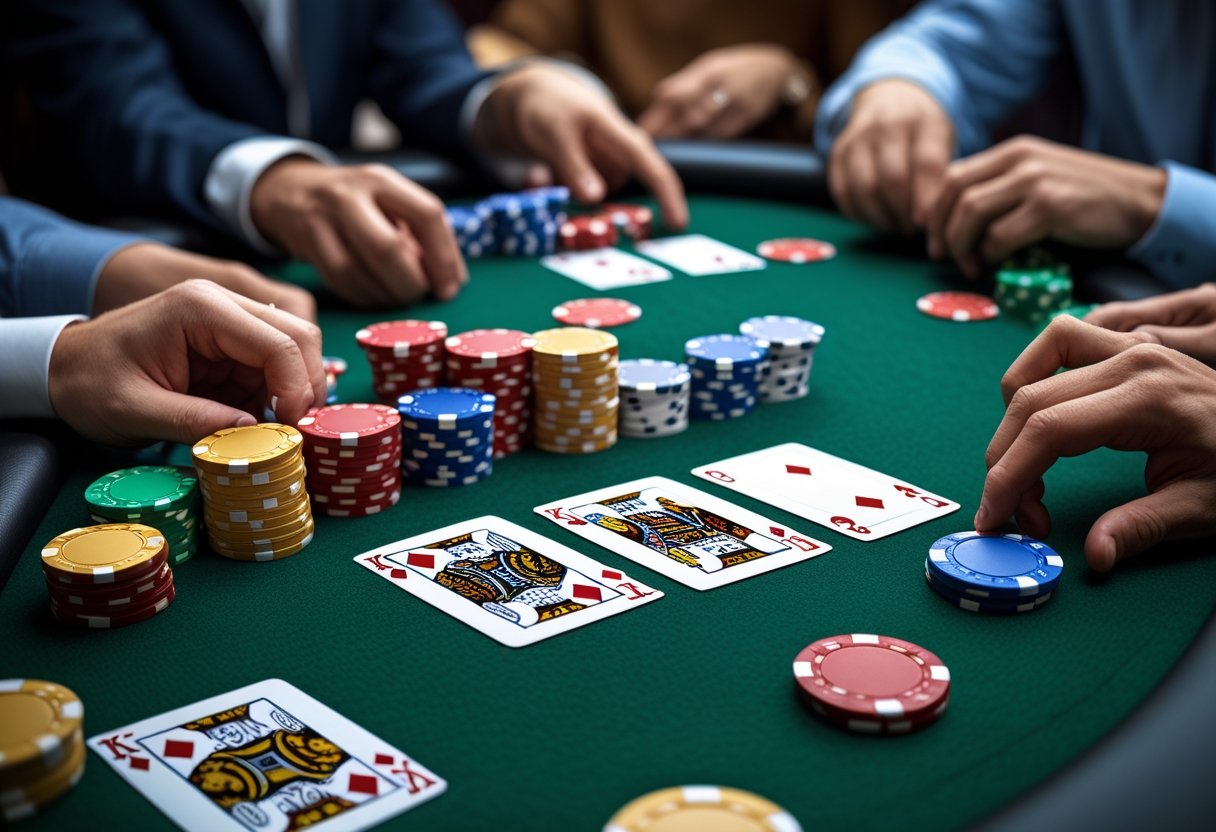
What Is Poker?
Poker is a family of card games where players bet on the strength of their hands using a standard 52-card deck. The game combines skill, strategy, and chance, with players either holding the best hand or convincing opponents to fold through betting and bluffing.
History and Origins
The exact origins of poker remain debated among game historians. Many scholars point to the French game Poque and the Iranian game As-Nas as possible early influences. The game became popular in the American South during the early 19th century.
Gambling riverboats on the Mississippi River helped spread poker around New Orleans in the 1830s. The earliest version used only 20 cards, with hands ranking from Ace to Ten. Each player received five cards in this original format.
Seven-card stud appeared in the mid-19th century and spread widely through the US military. The game became a casino staple after World War II. The World Series of Poker, which started in the 1970s, helped grow the game’s popularity even more.
Texas hold ’em and other community card games began dominating the poker game scene in the following decades. Television coverage in the early 2000s created a poker boom between 2003 and 2006.
Core Concepts and Rules
Players wager chips based on their hand’s value compared to other players at the table. The game starts with forced bets called blinds or antes. A dealer distributes cards clockwise, with the number and arrangement varying by poker variant.
During each betting round, players must either call (match the bet), raise (increase the bet), or fold (give up their hand). If all players except one fold, that remaining player wins the pot without showing their cards. This mechanic makes bluffing a key feature of poker.
When multiple players remain after the final betting round, a showdown occurs. Players reveal their cards, and the best five-card hand wins the pot. The game uses a standard hand ranking system, with combinations like straight flush and four of a kind determining winners.
Popular Poker Variants
Texas Hold ’em stands as the most popular poker variant worldwide. Players receive two private cards and share five community cards dealt face-up on the table. Players make their best five-card hand from these seven total cards.
Seven-Card Stud deals players seven cards total—three face-down and four face-up. Players must create the best five-card hand from their seven cards. No community cards exist in this variant.
Omaha works similarly to Texas hold ’em but gives each player four private cards instead of two. Players must use exactly two of their private cards and three community cards to form their hand.
Five-Card Draw gives each player a complete five-card hand dealt face-down. Players can discard up to three cards and receive replacements before a final betting round.

How to Play Poker
Poker requires players to understand table dynamics, recognize hand strength, and make strategic betting decisions. The game combines structure with psychology, where knowing when to bet, call, or fold determines success.
Table Setup and Structure
A poker game uses a standard 52-card deck with cards ranked from ace (highest) down to two (lowest). The game works best with 2 to 7 players, though 6 or 7 is ideal for most variations.
Players use chips to represent money during the game. Each player buys chips before play begins and cashes them out when finished.
The dealer position rotates clockwise after each hand, marked by a dealer button. This position determines the order of play and who posts forced bets called blinds. In many poker games, the two players to the left of the dealer post the small blind and big blind before cards are dealt.
Cards are shuffled and cut before each deal. The dealer distributes cards clockwise, one at a time. Players keep their cards private and protect them from touching the discard pile, which would make the hand dead.
Hand Rankings Explained
Every poker hand consists of exactly five cards. Players must know these rankings from highest to lowest:
- Straight Flush: Five consecutive cards of the same suit
- Four of a Kind: Four cards of the same rank
- Full House: Three cards of one rank plus a pair
- Flush: Five cards of the same suit, not consecutive
- Straight: Five consecutive cards of mixed suits
- Three of a Kind: Three cards of the same rank
- Two Pair: Two different pairs
- One Pair: Two cards of the same rank
- High Card: No matching cards
When two players have the same hand type, the highest-ranking cards within those hands determine the winner. For example, a pair of kings beats a pair of sevens.
Essential Betting Actions
Players choose from five actions during betting rounds. Check means passing the action without betting when no one has bet yet. Bet puts chips into the pot first.
Call matches the current bet amount to stay in the hand. Raise increases the current bet, forcing other players to match the new amount to continue. Fold discards the hand and forfeits any chance to win the pot.
Betting moves clockwise around the table. Each betting round ends when all active players have put in equal amounts or when all players except one have folded. The player who bets or raises last must be matched by others to see the next cards or showdown.
Bluffing serves as a core strategy in poker. Players can win by making opponents fold better hands through aggressive betting, even without strong cards themselves.

Online Poker Basics
Online poker brings the classic card game to digital platforms where players compete for real or virtual chips from their computers and mobile devices. The transition to online play requires understanding site selection, account setup protocols, and how virtual tables operate differently from physical casino environments.
Choosing an Online Poker Site
Players should evaluate several factors when selecting an online poker platform. Licensed sites regulated by gaming authorities offer the most protection for deposits and fair gameplay.
Traffic levels matter significantly. Sites with more active players provide shorter wait times for games and a wider variety of stake levels. Popular platforms typically spread games around the clock at multiple table limits.
Game variety separates quality poker sites from basic ones. Look for platforms offering Texas Hold’em, Omaha, Seven-Card Stud, and tournament options. Some sites specialize in specific variants while others provide comprehensive selections.
Bonus structures and rakeback programs affect long-term value. New player bonuses often match initial deposits up to specific amounts. Regular players benefit from loyalty programs that return a percentage of rake paid.
Software quality impacts the playing experience directly. Smooth interfaces, reliable connections, and mobile compatibility allow players to focus on strategy rather than technical issues.
Account Creation and Security
Creating an account starts with providing basic personal information including name, email address, and date of birth. Most sites verify age requirements before allowing real money play.
Password strength protects accounts from unauthorized access. Use combinations of uppercase letters, lowercase letters, numbers, and symbols. Avoid reusing passwords from other websites.
Two-factor authentication adds an extra security layer. This feature requires a code from a mobile device or email in addition to the standard password. Enable it whenever available.
Identity verification becomes necessary before withdrawing funds. Sites request government-issued identification and sometimes proof of address. This process prevents fraud and meets regulatory requirements.
Banking options vary by location and platform. Credit cards, e-wallets, bank transfers, and cryptocurrency provide different deposit and withdrawal methods. Check processing times and fees before selecting a payment method.
Understanding Virtual Chips and Tables
Virtual poker tables display player positions, chip stacks, and community cards on screen. The interface shows betting options as clickable buttons rather than verbal declarations.
Play money tables offer free poker online for practice without financial risk. These tables help new players learn software controls and basic strategy before risking real funds. The competition level differs significantly from real money games.
Chip denominations appear as numerical values rather than physical poker chips. Players track stack sizes through on-screen displays that update automatically after each hand.
Table limits define minimum and maximum buy-ins for each poker game. Micro stakes start as low as $0.01/$0.02 blinds while high stakes tables can require buy-ins of thousands of dollars.
Multi-tabling allows experienced players to compete at several tables simultaneously. The software arranges multiple table windows on screen for efficient gameplay. Start with single tables before attempting this advanced technique.
Time banks give players extra seconds for difficult decisions. Most sites provide a standard decision time plus reserve time for complex situations. Running out of time results in automatic folds.
Free Poker Online
Free poker online lets players practice their skills and enjoy the game without spending money, while popular platforms offer both tournament and cash game formats that differ from real money poker in stakes and player behavior.
Benefits of Playing Free Poker
Free poker online provides a risk-free environment for beginners to learn the rules and develop strategies. Players receive virtual coins instead of using actual money, which removes financial pressure and allows them to focus on understanding hand rankings and gameplay mechanics.
Practice without financial commitment helps players build confidence before moving to real money games. Free poker platforms let users test different playing styles and learn from mistakes without losing money. Players can practice as much as they want, improving their decision-making skills and understanding of poker fundamentals.
Most free poker sites offer daily login bonuses and other promotions that provide additional virtual coins. These bonuses keep players engaged and give them more opportunities to play without any cost.
Popular Free Poker Platforms
WSOP offers free Texas Hold’em games where players can connect with others worldwide. The platform is trusted and provides official poker games without requiring downloads or registration fees.
Replay Poker features both Texas Hold’em and Omaha variants with free chips distributed daily. Players can compete in tournaments without downloads. PokerStars provides free tables for both cash games and tournaments, letting players join or leave at any time.
Zynga Poker delivers free Texas Hold’em with multiple tables and tournament options. The platform attracts millions of players who enjoy social poker gaming. These sites operate on computers and mobile devices, making free poker accessible anywhere.
Differences Between Free and Real Money Games
Player behavior changes significantly between free and real money poker. Free poker players often take more risks because they face no financial consequences. They might call or raise with weaker hands, creating a looser playing environment.
Real money games feature more strategic and cautious play. Players protect their bankrolls and make calculated decisions based on odds and probability. The quality of competition typically increases in real money games as players have financial incentives to play well.
Free poker uses virtual coins that cannot be withdrawn as cash prizes. Real money poker involves actual deposits and withdrawals. However, some sweepstakes casinos bridge this gap by offering Sweepstakes Coins that can be exchanged for cash prizes or gift cards while still maintaining a free-to-play model.
Poker Strategy and Tips
Winning at poker requires more than luck—it demands smart decisions about which hands to play, understanding where you sit at the table, managing money wisely, and reading opponents effectively. These core skills separate consistent winners from players who rely on chance.
Starting Hand Selection
Playing too many hands is the fastest way to lose chips in a poker game. Strong players stick to a tight range of quality starting hands and play them aggressively.
Premium hands like pocket aces, kings, queens, and ace-king should always see raises. Medium pairs (tens through sixes) and suited connectors like 9-8 or 7-6 of the same suit have value but require careful play. Weak hands like 9-5 offsuit or J-3 should hit the muck immediately.
Hands worth playing aggressively:
- Premium pairs (A-A, K-K, Q-Q)
- Strong aces (A-K, A-Q)
- High suited connectors (Q-J, J-10 suited)
The key is playing fewer hands overall but betting and raising with the ones selected. This approach disguises hand strength since opponents can’t tell if a raise represents pocket aces or suited connectors. Discipline matters more than memorizing charts—folding weak hands saves money over time.
Position and Table Dynamics
Position determines how many players act before making a decision. Late position (the button and cutoff seats) provides a massive advantage since players see what others do first.
Players in late position can profitably play more hands than those in early position. Someone under the gun (first to act) should only play premium hands. The button can add speculative hands like small pairs and suited aces to the range.
The big blind deserves special attention. Since one big blind is already invested, defending against raises becomes cheaper than from other positions. This discount allows calling with borderline hands like K-9 or Q-6 suited that would fold elsewhere.
Table dynamics shift strategy too. Tight tables with few players seeing flops allow more aggressive stealing. Loose tables with multiple limpers require stronger hands to enter pots. Observing whether opponents fold to aggression or call frequently shapes betting decisions.
Bankroll Management
A bankroll is the total amount of money set aside specifically for poker. Proper management prevents going broke during natural downswings that every player experiences.
Cash game players should have at least 20-30 buy-ins for their stake level. Someone playing $1/$2 needs $4,000-$6,000 to weather variance safely. Tournament players need 50-100 buy-ins since prizes cluster at the top and losses happen more frequently.
Moving down in stakes when the bankroll shrinks protects against elimination. Pride costs money—dropping from $2/$5 to $1/$2 after losses is smarter than risking the entire bankroll. Moving up requires building a cushion first, not jumping stakes after one good session.
Never play with money needed for bills or expenses. Poker involves risk, and even skilled players face losing stretches that can last weeks or months.
Recognizing Player Types
Every poker game contains different player personalities that require adjusted strategies. Identifying these types early provides crucial advantages.
Tight-aggressive players fold most hands but bet strongly with quality holdings. They represent the toughest opponents and deserve respect when they show aggression. Avoid bluffing these players without strong reads.
Loose-aggressive players enter many pots with raises and bets. They create big pots and apply pressure constantly. Playing tight against them and letting them bluff off chips works well. Trapping with strong hands extracts maximum value.
Tight-passive players fold often and rarely bet without premium hands. They call too much instead of raising. Betting against these opponents wins pots since they fold unless they hit strong hands. Their checks usually signal weakness.
Loose-passive players call excessively with weak hands but rarely raise. These are the most profitable opponents. Value betting against them with decent hands earns steady profit since they pay off with worse holdings.
Poker Etiquette and Responsible Play
Following proper poker etiquette creates a better experience for everyone at the table, while responsible gambling practices help players maintain control over their gaming habits. These guidelines apply whether playing in a casino or from home on a computer.
Online and Live Poker Manners
Players should keep chip stacks neat and visible at live poker tables. High-value chips must stay in front of smaller denomination chips so opponents can estimate stack sizes accurately. The standard practice involves organizing chips in clean vertical stacks of 20 chips each.
Key Live Poker Rules:
- Pay attention to the game and act in turn
- Keep cards on the table at all times
- Place chips forward clearly instead of tossing them into the pot
- Stay polite to dealers and other players
- Avoid discussing hands while action is ongoing
Online poker requires its own set of manners. Players should use the chat function respectfully and avoid name-calling or complaining about bad beats. Stalling or deliberately running down the time bank on every decision disrupts the game flow for everyone at the table.
Multi-tabling players need to act within reasonable timeframes. If someone regularly activates their time bank while playing multiple tables, they should reduce the number of games they’re playing simultaneously.
Preventing Problem Gambling
Setting limits before playing helps players maintain control over their poker activities. This includes time limits and financial boundaries that match their budget. Players should only use money they can afford to lose and never chase losses by playing beyond their predetermined limits.
Warning signs of problem gambling include playing with borrowed money, hiding gambling activities from family, or feeling unable to stop despite negative consequences. Players who find themselves thinking constantly about poker or lying about their playing habits should recognize these as red flags.
Taking regular breaks during sessions helps maintain clear decision-making. Players benefit from stepping away from the table to evaluate their mental state and ensure they’re playing for entertainment rather than desperation.
Resources for Support
The National Council on Problem Gambling operates a confidential helpline at 1-800-522-4700 available 24 hours a day. Gamblers Anonymous offers free support groups in communities across the country and provides online meetings for those who prefer remote participation.
Most regulated online poker sites include responsible gaming tools such as deposit limits, session time reminders, and self-exclusion options. Players can activate these features through their account settings to help manage their play.
Professional counseling services specialize in gambling addiction treatment. Organizations like the National Problem Gambling Helpline Network connect individuals with local resources including therapists trained in gambling disorders and financial counseling services.
Frequently Asked Questions
Players often need clear answers about poker rules, odds calculations, game variations, winning strategies, legal considerations, and bluffing techniques to improve their understanding and gameplay.
What are the basic rules of playing poker?
Poker involves players betting into a central pot during a hand, with the goal of either holding the best hand at showdown or convincing other players to fold. Each player receives cards that they use to make the strongest possible five-card combination. The game progresses through betting rounds where players can check, bet, call, raise, or fold based on their hand strength and strategy.
The player who wins the pot either shows the best hand when all cards are revealed or remains as the last player after everyone else has folded. Most poker games follow a standard hand ranking system where a royal flush ranks highest and a high card ranks lowest. Different poker variations modify these basic rules but maintain the core concept of betting and hand evaluation.
How does one calculate poker hand odds?
Poker hand odds represent the probability of completing a specific hand based on the cards a player holds and the cards visible on the table. Players calculate these odds by counting their “outs,” which are the unseen cards that would improve their hand to a likely winner. A common method divides the number of outs by the number of unknown cards remaining in the deck.
The rule of two and four provides a quick estimation method for calculating odds. Players multiply their outs by two to estimate the probability of hitting their hand on the next card. They multiply by four when two cards remain to be dealt, such as after the flop in Texas Hold’em.
Pot odds help players decide whether a call is profitable by comparing the current pot size to the cost of calling. If the pot odds are greater than the hand odds, calling becomes mathematically favorable over time.
What are the different variations of poker games available online?
Texas Hold’em stands as the most popular online poker variation where players receive two private cards and share five community cards. Omaha poker gives each player four private cards and requires them to use exactly two of those cards with three community cards to make their final hand. Seven-Card Stud deals players seven cards throughout the hand with no community cards, mixing face-up and face-down cards across multiple betting rounds.
Five-Card Draw allows players to exchange unwanted cards for new ones from the deck after the initial deal. Razz poker reverses traditional hand rankings where the lowest hand wins instead of the highest. Badugi uses a unique four-card hand ranking system focused on creating the lowest hand with cards of different suits.
Many online poker sites also offer mixed games that rotate between different variations. Players can find fast-paced formats and tournament structures across all these variations.
Which strategies are considered most effective in Texas Hold’em?
Starting hand selection forms the foundation of solid Texas Hold’em strategy since playing too many weak hands leads to consistent losses. Players should enter pots with strong hands like high pairs, high suited connectors, and premium face cards while folding marginal holdings from early positions. Position at the table matters significantly because acting last provides more information about opponents’ actions before making decisions.
Aggressive play often wins more pots than passive play because betting and raising puts pressure on opponents. Players should bet their strong hands for value and avoid slow-playing too often, which allows opponents to see cheap cards. Reading opponents’ betting patterns helps identify their hand strength and tendencies.
Bankroll management protects players from going broke during losing streaks by ensuring they play at stakes appropriate to their total poker funds. Most successful players avoid risking more than five percent of their bankroll in any single game or tournament.
Can one legally play poker for money on the internet?
Online poker legality varies significantly by country and, within the United States, by individual state. Some jurisdictions fully regulate and license online poker sites, while others prohibit real-money online poker entirely. Players must check their local laws to determine whether online poker is permitted in their specific location.
Several U.S. states including Nevada, New Jersey, Pennsylvania, and Michigan have legalized and regulated online poker within their borders. Licensed sites in these states operate legally and provide player protections through government oversight. Many countries outside the United States also maintain regulated online poker markets with proper licensing requirements.
Players should only use licensed and regulated poker sites in jurisdictions where online poker is legal. Unlicensed sites may operate in legal gray areas and lack player protections that regulated sites provide.
What does it mean to ‘bluff’ in poker and how is it executed effectively?
Bluffing means betting or raising with a weak hand to make opponents fold better hands and win the pot without reaching showdown. This tactic works because poker allows players to win by forcing folds rather than always needing the best cards. Successful bluffs require careful consideration of opponents, board texture, and betting patterns throughout the hand.
Effective bluffing targets opponents who have shown weakness or demonstrated a tendency to fold frequently. The bluff must tell a believable story that matches the betting action from earlier streets. Players should bluff more often when fewer opponents remain in the hand since convincing multiple players to fold becomes increasingly difficult.
Board texture influences bluff success rates because certain community cards favor the bluffer’s perceived range of hands. Bluffs work better when the board shows potential straights, flushes, or other strong combinations that the bluffer could reasonably hold. Position also matters since bluffing from late position appears more credible than bluffing out of position.
Timing and frequency matter because bluffing too often makes a player predictable and easy to exploit. Balanced play that mixes bluffs with value bets keeps opponents guessing and unable to easily counter a player’s strategy.